The goal is a bridge
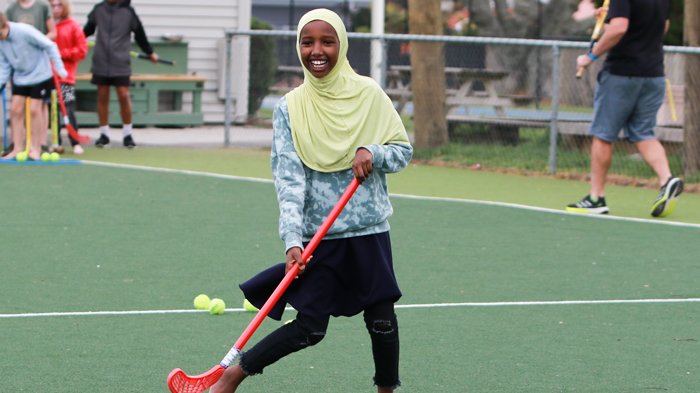
When Hamilton Boys’ High School noticed that young people from migrant backgrounds were under-represented in the Moving Waikato Youth Survey, it raised an important question: what are we missing when we don’t hear their voices?
Sport Waikato worked with Hamilton Boys’ High School, Hillcrest High School and the Refugee Orientation Centre to listen more closely to 18 Afghan, nine Somali and seven Colombian young people. Through focus groups and individual interviews, we asked them to talk about movement in their own words.
What they told us went well beyond sport. They spoke about family, faith, culture, language, food, friendship, safety, gender, home and belonging.
Roots that travel
For the young people we spoke with, home was not simply a place they had left behind. It travelled with them.
For Colombians, it could be hot chocolate with cheese, music and dance. For Somali rangatahi, tea and food for visitors and prayer. For Afghans, rugs, large family gatherings and respect for parents and elders.
The cultures and experiences were different, but beneath them was something shared: the importance of feeling welcomed, recognised and able to belong.
That matters because walking onto a court or field, or into a gym, does not mean leaving everything else at the door.
An open door is not always enough
We often think about participation in terms of opportunity. Is there a team, facility or programme? Can someone register?
But an opportunity can technically exist and still not feel available. Participation may come with questions about clothing, mixed-gender activities, halal food, prayer and private changing spaces, whether parents understand what is happening and whether a young person can bring a friend.
Even something as small as the lollies handed out at half-time can matter. If you must check every time whether they contain gelatin, the message can become: you are welcome here, but you need to work out how to fit in.
What would it feel like instead to enter a space that had already thought about you?
Family is not a barrier to work around
The research also challenged the idea that participation is simply an individual choice.
For some young people, particularly girls, participation can involve family expectations, safety, gender, clothing, transport, study priorities and trust.
That does not make family the problem. It makes family part of the solution. If a family does not understand or trust an activity, it may never become genuinely available to the young person, however open the registration form says it is.
Perhaps participation begins with trust, not registration.

More sport does not necessarily mean more play
New Zealand was described as safe, full of opportunity and equipped with good facilities and organised sport. But several young people also spoke about something they had lost, play.
Somali girls talked about making football goals from rocks. Colombian young people remembered street play. Others spoke of neighbours, friends and movement that simply happened.
In creating more organised opportunities, have we made movement too organised? Does every first experience need a registration form, uniform, team, fee and pathway? Or could it start with a ball, some friends and somewhere to play?
So how do we create environments where young people can bring their culture, family, faith, language, friendships and aspirations with them?
It might mean offering long-sleeved or long-pant clothing, considering halal food, prayer and privacy, or providing female-only opportunities. It could mean talking with families before asking young people to register, making spaces and equipment available for informal play, or letting someone bring a friend and try an activity without committing.
Most importantly, it means asking young people and their families rather than assuming we already know the answer.
The goal is a bridge
Integration is not the same as assimilation. Assimilation asks someone to cross over and fit the system waiting on the other side. Integration asks both sides to move, creating the opportunity to meet in the middle and build something different.
So perhaps the question for those of us creating movement opportunities is no longer simply, who isn’t participating? It is: what could we change so more young people feel this was designed with them in mind?