A local approach to bringing kids back to cricket
Mercury Bay Cricket Club
For years, junior cricket in Mercury Bay came with a heavy price: long road trips, all-day commitments, and dwindling participation numbers. Families were travelling more than two hours each way for games that stretched across most of the day — and eventually, many simply stopped signing up.
Now, Mercury Bay Cricket Club is proving that when sport is built around the needs of young people and their whaanau, participation can thrive.
Sport Waikato Regional Connectivity Coordinator and Mercury Bay Cricket Club President Rob Corkill says the old model was creating barriers rather than opportunities.
“We had junior cricket teams travelling two hours for a game of cricket that was then taking five hours to play and then travelling over two hours home again,” says Corkill. “So no one was really having fun.”
"A lot of the work that Sport Waikato is focused on is around removing barriers to participation and creating quality opportunities for people of all age groups to be active."
"Through my knowledge, and with the support of a club committee who understands the bigger picture, we knew locally as a club we needed to make that change."
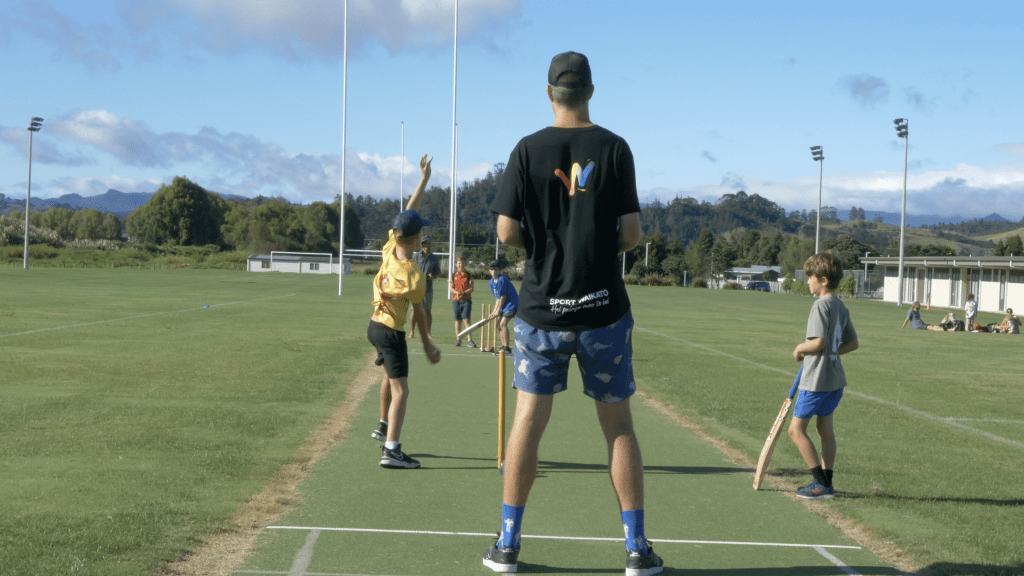
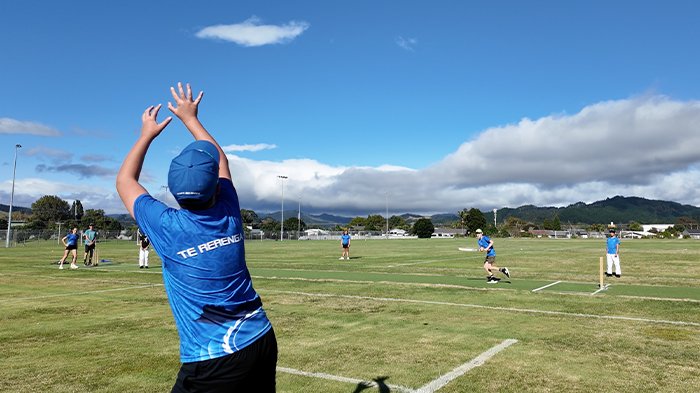
Based in Whitianga, the club decided to rethink the way cricket was delivered in the region. Instead of following the traditional club-versus-club competition model spread across the Waikato, Mercury Bay Cricket Club shifted to a local, school-based approach focused on reducing travel, simplifying commitment, and prioritising fun.
The club invited nearby schools within a 30-minute radius to take part, creating local competitions for different age groups. Games are now held every second Saturday (every Saturday but alternating age groups), last just two hours, and are designed to be flexible and accessible.
“The kids here, they’re not committed to playing every week,” says Corkill. “Trainings are optional, and it’s very much turn up on the day, work out the numbers as we go. It’s super casual. Super fun.”
The impact was immediate.
Participation numbers increased by 250 percent, with dozens of children turning up to play in the first weeks of the new format. Corkill says the growth showed the club they were on the right track.
“We removed ourselves from the standard competition model and thought, ‘We’re going to do it locally,’” he says. “Immediately through the numbers that were turning up, we knew that we were onto a winner.”
Parents have also embraced the changes.
Daniel Brownlee, a local parent and junior coach, says the previous model placed enormous pressure on families.
“The challenges before were just such a massive level of commitment,” says Brownlee. “There was so much travel and time away nearly every week. Saturday was gone, and that’s a big sacrifice for a lot of families.”
Now, he says, cricket fits far more naturally into family life.
“The benefit is there’s far less travel involved. The games are shorter, so the children don’t lose interest, and they’re far more keen to get involved.”
Importantly, the new approach has shifted the focus back to enjoyment and inclusion.
“It’s brought a lot of fun back into cricket rather than boredom and tedium,” Brownlee says. “It doesn’t matter what skill level they are. Anyone can show up and enjoy themselves.”
To keep players engaged, the club also adapted the way games are played. Smaller teams, batting pairs, and more opportunities to bowl and run mean children are constantly involved in the action.
“What that also meant was the barrier of the non-striking batsman leaning on their bat, not being engaged in the game, was immediately removed,” says Corkill. “They get to hit the ball more. They get to run more, and they just feel more engaged in the game itself.”
The success of the model reflects a broader focus on removing barriers to participation and creating quality sporting experiences for tamariki and rangatahi.
For Mercury Bay Cricket Club, the results speak for themselves: more kids playing, more families involved, and a stronger sense of connection within the community.
“Cricket will never be the dominant sport up here,” says Corkill. “So we need to ensure that we fit it in around other people’s lifestyles so that they get something out of it.”